Results
Roof Area Visual Diagram
Enter your house base area or dimensions above to see how pitch changes the actual roof area.
The roof area calculator will convert your flat home footprint into the sloped roof surface area, taking pitch into account, so that the number you receive is the same as what suppliers and contractors use to price their materials. The calculator will return your total roof area, roofing squares, and suggested waste allowance after you enter your building's dimensions and roof pitch. Below are sections that explain how to calculate each result and what you can do with it.
What Is Roof Area and How Is It Different From My Home's Square Footage?
Roof area is defined as the total surface measured along the actual sloped planes of a roof, not the flat ground beneath it. A home with a 1,500-square-foot footprint does not have a 1,500-square-foot roof, because the roof's slope spreads that same footprint over a larger area. A 6:12 pitch adds about 11.8 percent more surface area than the footprint alone, and a 12:12 pitch adds 41.4 percent more.
This distinction matters because every roofing material, from shingles to underlayment to metal panels, is priced and packaged by actual surface coverage. Ordering based on your home's floor-plan square footage rather than the calculated roof area will consistently leave you short on material, sometimes by a significant margin, especially on steeper roofs.
How Does the Roof Area Calculator Work?
The calculator multiplies the base footprint of your building by a correction factor for pitch derived from Pythagoras' theorem. Imagine the roof slope as the hypotenuse of a right triangle. The flat run is one side, and the rise is the other. The steeper the triangle, the longer it is relative to the flat area beneath. This is why a steeper roof requires more material.
The calculation method used in this calculator follows the same roof measurement principles commonly referenced by the National Roofing Contractors Association (NRCA).
The formula is:
Actual Roof Area = Base Footprint Area × Pitch Correction Factor
The correction factor itself comes from this calculation: the square root of one plus the result of dividing the rise by 12, squared. This is the same approach referenced in NRCA estimating guidance and is consistent with the material application requirements outlined in IRC Section R905.
Pitch Correction Factor Table
| Pitch | Angle | Correction Factor | Area Added |
| 1:12 | 4.8° | 1.003 | +0.3% |
| 2:12 | 9.5° | 1.014 | +1.4% |
| 3:12 | 14.0° | 1.031 | +3.1% |
| 4:12 | 18.4° | 1.054 | +5.4% |
| 5:12 | 22.6° | 1.083 | +8.3% |
| 6:12 | 26.6° | 1.118 | +11.8% |
| 7:12 | 30.3° | 1.158 | +15.8% |
| 8:12 | 33.7° | 1.202 | +20.2% |
| 9:12 | 36.9° | 1.250 | +25.0% |
| 10:12 | 39.8° | 1.302 | +30.2% |
| 12:12 | 45.0° | 1.414 | +41.4% |
A 6:12 roof pitch equals approximately 26.6 degrees and adds about 11.8 percent more surface area than the base footprint beneath it. Find your pitch in the left column, then apply the corresponding factor directly to your measured base area.
How Do I Calculate Roof Area Step by Step?
This example walks through a complete calculation using real numbers, and every step can be followed on its own without referring to any other part of this guide.
The example uses a simple gable roof: a house 40 feet long and 30 feet wide, a 1-foot eave overhang on every side, and an 8:12 pitch.
Step 1: Adjust for the eave overhang. Add 1 foot to each end of both the length and width, since the overhang extends past the exterior walls. This gives an adjusted length of 42 feet and an adjusted width of 32 feet, so the base footprint area is 42 × 32 = 1,344 square feet.
Step 2: Find the correction factor for an 8:12 pitch. Using the formula, the square root of 1 plus 0.667 squared is approximately 1.202, which matches the value in the table above.
Step 3: Multiply the base area by the correction factor. 1,344 × 1.202 = 1,615 square feet of actual roof surface.
Step 4: Add a waste allowance and convert to roofing squares. Adding 10 percent for cuts and waste, 1,615 × 1.10 = 1,777 square feet. Dividing by 100 gives 17.77 roofing squares, which rounds up to 18 squares for ordering purposes.
A 1,344-square-foot footprint with an 8:12 pitch and a 1-foot eave overhang requires approximately 18 roofing squares, including a standard waste allowance.
What Is a Roofing Square and How Many Do I Need?
A roofing square is defined as 100 square feet of roof surface area, and it is the standard unit that contractors and material suppliers across the United States use for pricing and ordering. To find your square count, divide your total calculated roof area by 100. Standard three-tab asphalt shingles typically cover about 33 square feet per bundle, which means three bundles make up one full square, though architectural shingle coverage varies by manufacturer and should be confirmed on the packaging.
| Roof Area (sq ft) | Squares (10% waste) | 3-Tab Bundles |
| 1,000 | 11 | 33 |
| 1,500 | 16.5 | 50 |
| 2,000 | 22 | 66 |
| 2,500 | 27.5 | 83 |
| 3,000 | 33 | 99 |
How Does Roof Shape Affect the Area Calculation?
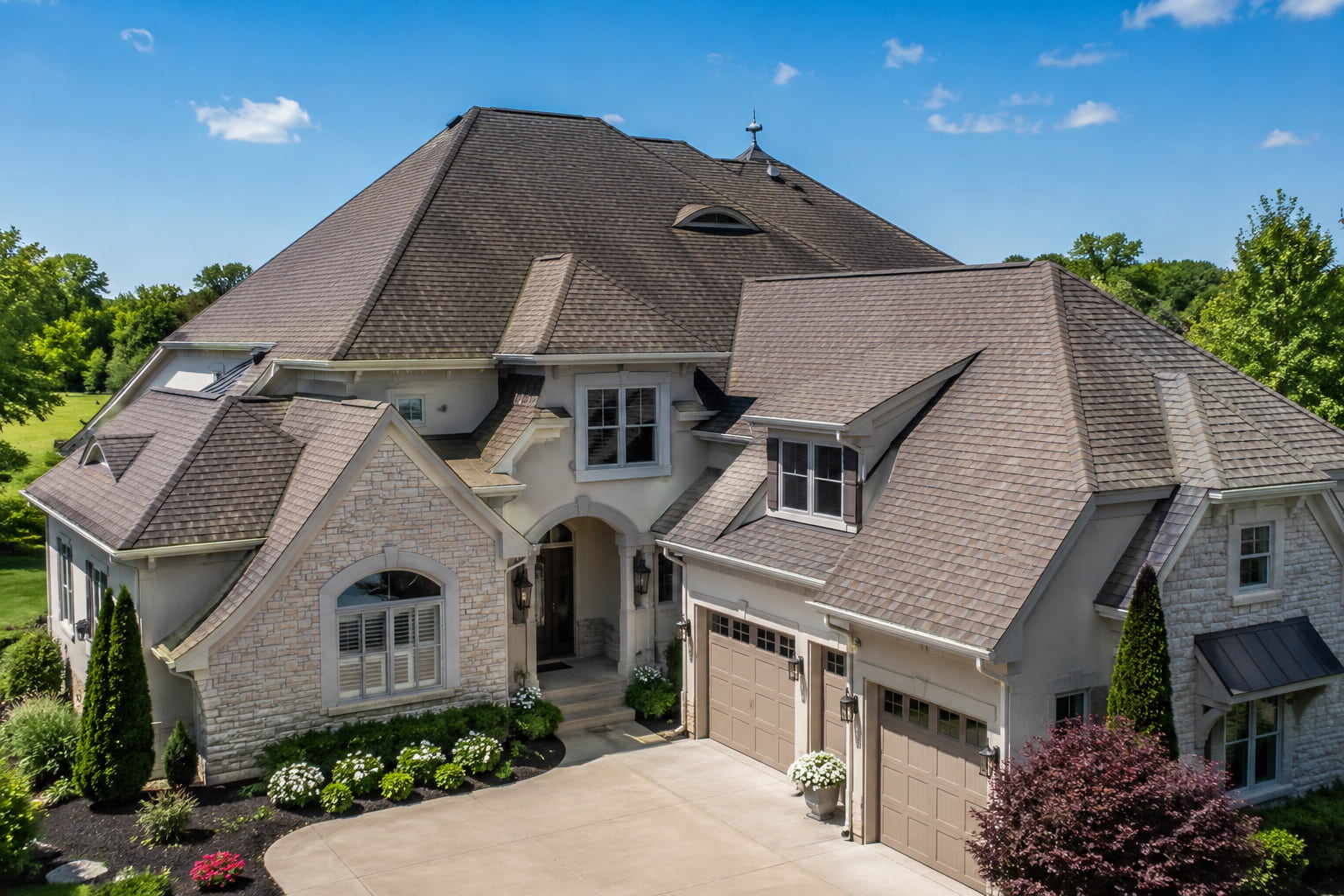
The shape of a roof determines the extra surface area beyond what a simple calculation based on base area x slope factor would suggest. The gable, which is the most common roof design in residential homes with two sloped sides that meet at a single ridge, matches the simple calculation used in this guide.
Hip roofs have a slope on each side, not just two. This adds between 10 and 15 percent to the material required for a roof with the same footprint. The additional ridges and hip rafters are responsible for this. Mansard and Gambrel roofs have two slopes per side. Each slope section must be measured, calculated, and then added to get the total. Shed roofs are the easiest to measure because they have a single sloping plane.
What Is the Minimum Roof Pitch Allowed by Building Code?
The International Residential Code Section R905 sets minimum pitch requirements for each major roofing material type sold in the United States. Asphalt shingles require at least a 2:12 pitch when installed with double underlayment, or a standard 4:12 minimum for a typical single-layer installation under R905.2.2. Metal standing-seam panels can go as low as 1:12 under R905.10.2, while clay and concrete tile require a minimum of 2.5:12 under R905.3.2, and wood shakes require at least 4:12 under R905.8.2.
Local jurisdictions frequently add their own amendments on top of the base IRC requirements, so always confirm minimum pitch rules with your local building department before finalizing a material choice.
What Should I Do With My Calculator Result?
If you are ordering shingles, divide your total area, including waste, by 100 to get your square count, then multiply that number by three for standard three-tab shingles, or check the manufacturer's bundle coverage directly if you are using architectural shingles.
If you are collecting contractor quotes, give every contractor the same square footage figure so each bid reflects an identical scope of work. A contractor who returns a noticeably different area than your own calculation should be asked to explain their measurement before any contract is signed.
If you are estimating underlayment, standard felt underlayment that meets ASTM D226 Type I or II specifications is sold by the square, so order the same count as your shingles. An ice and water shield is required under IRC R905.2.7 along the eaves in regions where design temperatures reach 25 degrees Fahrenheit or below, and in every roof valley, regardless of local climate.
If you are pulling a permit, most cities and counties require one for a full roof replacement, and the application typically asks for your roof area in square feet or squares, which your calculator result provides directly.
What Are Common Mistakes When Calculating Roof Area?
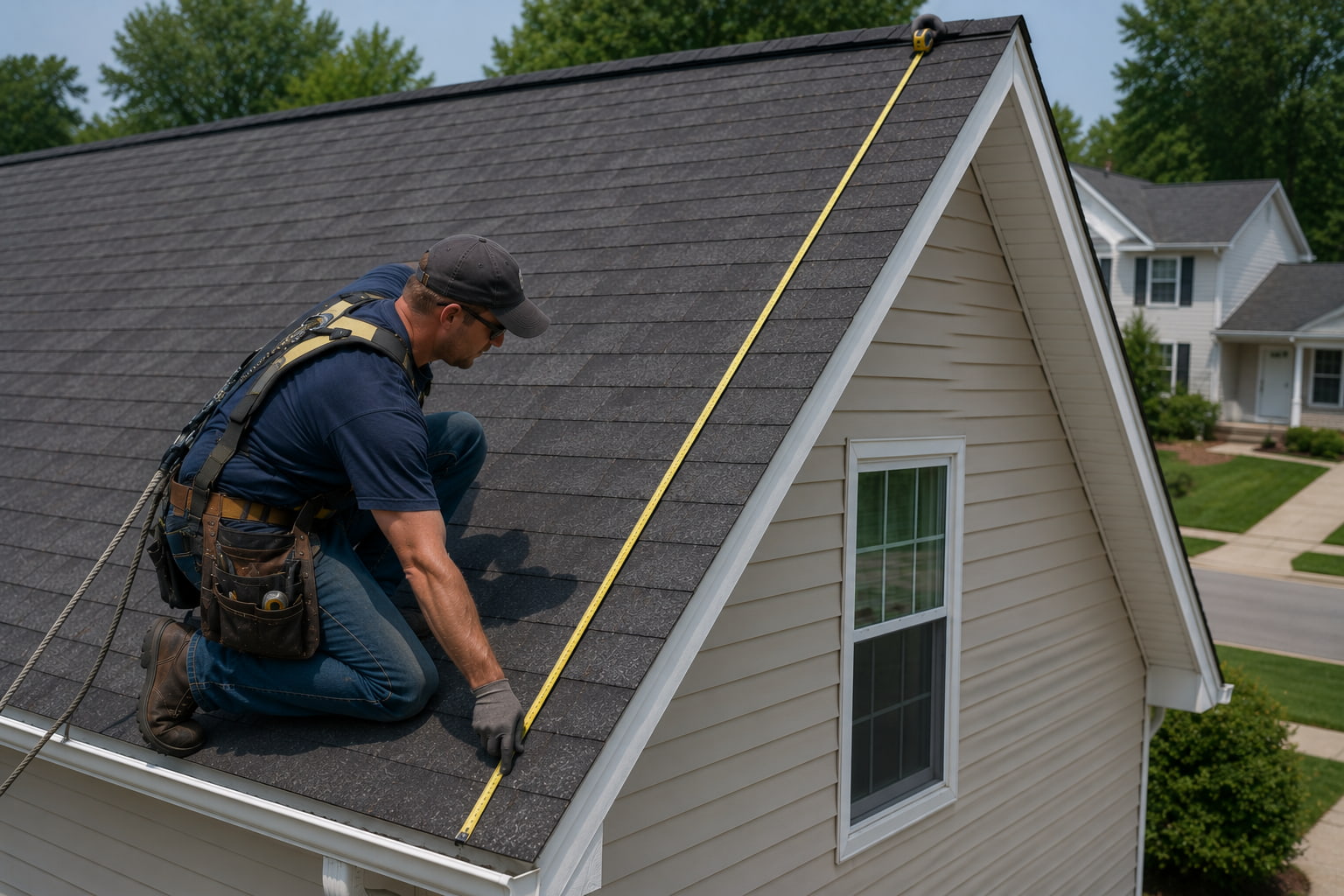
Using interior square footage instead of the exterior footprint is the most frequent error, since a home's interior living space is always smaller than its exterior footprint once wall thickness and any attached garage are accounted for. A home with 2,000 square feet of living space might actually sit on a 2,200 to 2,400 square foot exterior footprint.
Skipping the eave overhang produces a second common error. If a roof's eaves extend 12 inches past the walls on all four sides of a 40 × 30-foot house, the real dimensions to use are 42 × 32 feet, not 40 × 30, and that difference alone adds 124 square feet before the pitch correction is even applied.
Applying a single pitch to a mixed pitch roof causes a third error. Many homes have a main roof section at one pitch and an attached garage or porch at another, and treating the entire structure as a single uniform pitch will yield an inaccurate total. Each section needs to be measured and calculated independently, then summed.
Skipping the waste factor entirely is a fourth common mistake. The Asphalt Roofing Manufacturers Association recommends a 15 percent waste allowance for most residential reroofing projects, and using only 10 percent on a roof with multiple valleys or hips often results in running short mid-project.
Confusing pitch with degrees is one of the most frequent errors. A 12:12 pitch is not 12 degrees — it is 45 degrees. Pitch is always expressed as rise over run, never as a direct degree value, and a 6:12 pitch corresponds to 26.6 degrees rather than 6 degrees.
How Do I Find My Roof Pitch if I Do Not Already Know It?
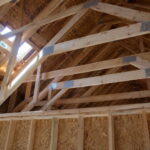
You can find your roof pitch from inside the attic by holding a 12-inch level horizontally against a rafter. At the 12-inch mark, measure straight up from the level to the underside of the rafter, and that measurement in inches is your rise. A 6-inch reading means a 6:12 pitch, while an 8-inch reading means an 8:12 pitch. From the outside, a smartphone pitch-finder app using the phone's built-in inclinometer provides a usable estimate. Original builder plans, county permit records, or home appraisal documents often list the pitch directly as well.
Once you know your roof pitch, use our Roof Pitch Calculator to instantly convert the measurement into pitch ratio, roof angle in degrees, slope percentage, and rafter length.
How Much Does Roofing Cost Per Square?
| Material | Life Expectancy | Cost Per Square (2026) |
|---|---|---|
| 3-tab asphalt shingles | 15 to 25 years | $150 to $250 |
| Architectural shingles | 25 to 30 years | $250 to $400 |
| Impact-resistant shingles | 30 to 40 years | $350 to $500 |
| Metal standing seam | 40 to 70 years | $600 to $1,200 |
| Concrete or clay tile | 30 to 100 years (concrete 30 to 50, clay 50 to 100) | $700 to $2,200 (concrete $700 to $1,900, clay $1,100 to $2,200) |
| TPO membrane (low-slope) | 15 to 25 years | $300 to $600 |
These figures are based on typical 2026 market ranges as commonly reported by US roofing suppliers and contractors, and they include both materials and labor for a standard single-story reroof with straightforward access. Material costs move with broader commodity markets, so always confirm current pricing with local suppliers before finalizing a budget If you are installing asphalt shingles, use our Shingle Calculator to estimate the number of bundles you need based on your total roof area.
Frequently Asked
What is a roof area calculator?
A roof area calculator takes your house footprint and roof pitch, then returns the actual square footage of roofing material needed for the project. It performs the underlying trigonometry automatically so the calculation does not need to be done by hand.
How do I calculate the roof area from the house area and pitch?
Multiply your exterior footprint area by the correction factor that matches your pitch. A 1,800 square foot footprint with a 7:12 pitch uses a factor of 1.158, producing 1,800 × 1.158 = 2,084 square feet, before any waste allowance is added.
What is a roofing square?
A roofing square equals 100 square feet of roof area and is the standard unit for pricing and ordering used by contractors and suppliers throughout the United States. Three bundles of standard three-tab shingles typically cover one full square.
How much waste should I add to my roof area?
Add a minimum of 10 percent for a simple gable or hip roof. The Asphalt Roofing Manufacturers Association recommends 15 percent for most residential projects, and roofs with multiple valleys, dormers, or chimneys often need up to 20 percent.
Is a 12:12 pitch roof safe to walk on?
A 12:12 pitch equals 45 degrees and falls under OSHA 29 CFR 1926.502, which requires personal fall arrest equipment for workers on residential roofs at that slope. Most professional roofers use harnesses and anchors at pitches of 6:12 and above, and a 12:12 roof should never be walked without proper fall protection equipment.
What roof pitch is most common on US homes?
The most common residential pitches in the United States are 4:12, 5:12, and 6:12. These pitches meet standard underlayment requirements under IRC R905.2.2 for asphalt shingles, drain effectively, and remain safe for crews to work on without specialized equipment.
I have a 2,000 square foot house with a 5:12 pitch. How much roofing material do I need?
A 2,000 square foot footprint at a 5:12 pitch uses a correction factor of 1.083, producing a roof area of 2,166 square feet. Adding 10 percent for waste brings the total to 2,383 square feet, or approximately 24 roofing squares, assuming the eave overhang is already included in the base footprint.
My roof has two different pitches on different sections. How do I find the total area?
Calculate each section independently before combining the totals. A 1,500 square foot main roof at 8:12 produces 1,500 × 1.202 = 1,803 square feet, while a 400 square foot garage addition at 4:12 produces 400 × 1.054 = 422 square feet. Adding these together gives 2,225 square feet before waste, or about 24.5 squares once 10 percent is added.
Can this calculator be used for metal or tile roofing instead of shingles?
Yes, roof area is a physical measurement that remains the same regardless of the material chosen to cover it. The coverage rate per bundle, panel, or roll differs by product, so confirm the exact coverage figure with the manufacturer once the area is known.
What is the practical difference between roof pitch and roof angle in degrees?
Pitch is written as rise over run, such as 6:12, while degrees measure that same slope as an angle. A 6:12 pitch equals 26.6 degrees, and a 12:12 pitch equals exactly 45 degrees. US building codes and most contractor quotes use pitch notation, while engineering drawings more often use degrees.
How This Calculator Was Built
The correction factors used throughout this calculator are derived from the formula: the square root of 1 plus the rise divided by 12, squared. This matches the method described in NRCA roofing estimating references and aligns with values found in widely used construction manuals. Minimum pitch requirements are drawn from IRC Sections R905.1 through R905.18, and ice and water shield requirements come from IRC R905.2.7. Fall protection guidance references OSHA 29 CFR 1926.502, and waste recommendations follow Asphalt Roofing Manufacturers Association guidance for residential reroofing projects. Cost figures reflect typical 2026 US market conditions, as reported by roofing supply distributors, and should be treated as planning benchmarks rather than formal quotes.
These calculators and guides are built for accurate planning and material estimation. For structural decisions or permit submissions, always verify results with a licensed contractor or your local building department.