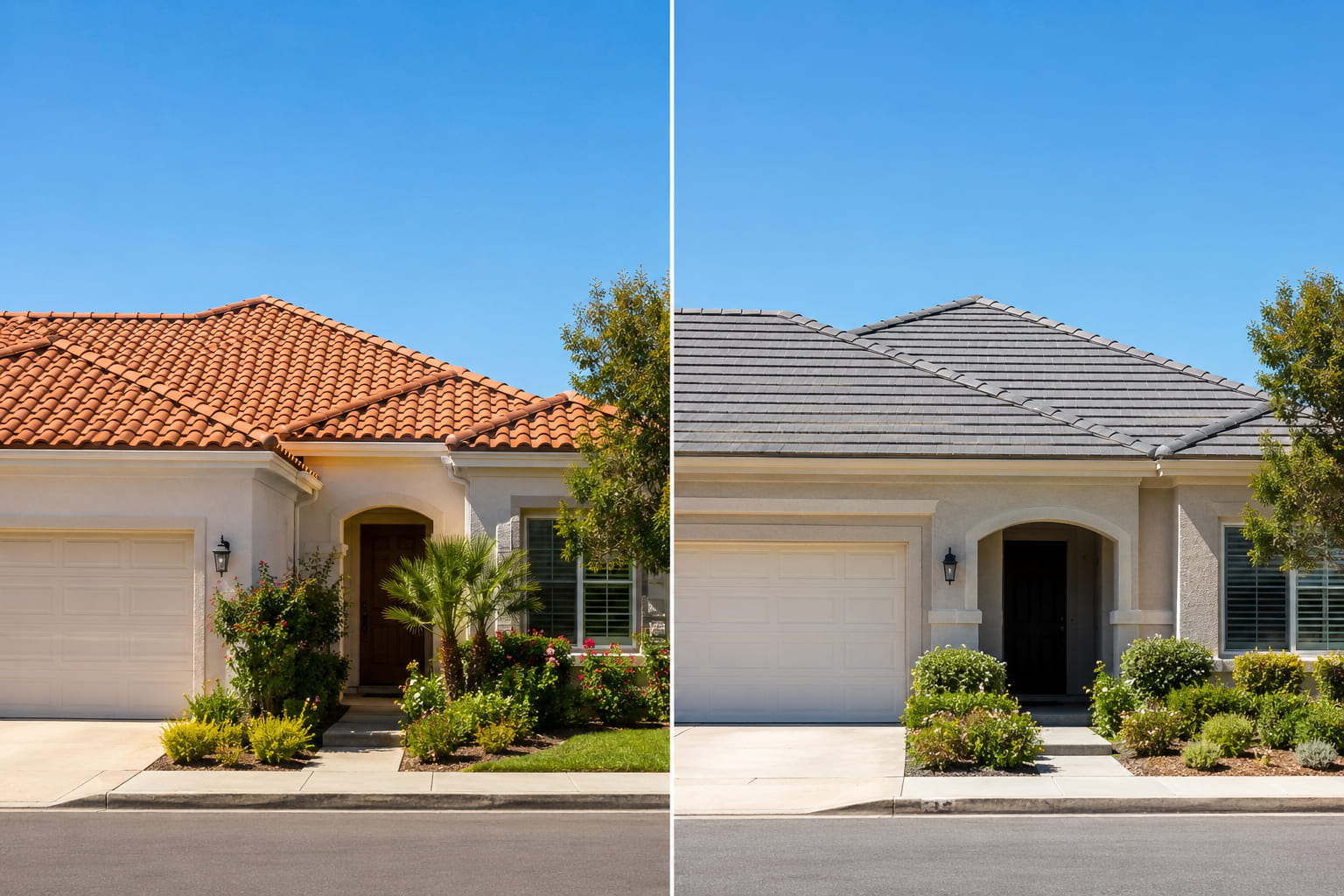
In the clay vs concrete roof tiles decision, clay is the better choice for most homeowners who plan to stay in their home long term and live in a climate with hard winters, because clay lasts 50 to 100 years, holds its color permanently, and absorbs far less water than concrete. Concrete roof tiles are the better choice for budget focused buyers in warm, dry climates, because concrete costs 30 to 50 percent less installed and offers more color and style options. The two materials look similar on a roof, but they behave very differently over decades.
The full picture comes down to five measurable differences: price, lifespan, weight, water absorption, and color permanence. Clay wins on lifespan, water resistance, and color. Concrete wins on upfront price, availability, and design variety. This guide walks through each difference with real numbers, shows you how to tell the two materials apart on an existing roof, and ends with a simple decision framework matched to your climate and budget.
What is the difference between clay and concrete roof tiles?
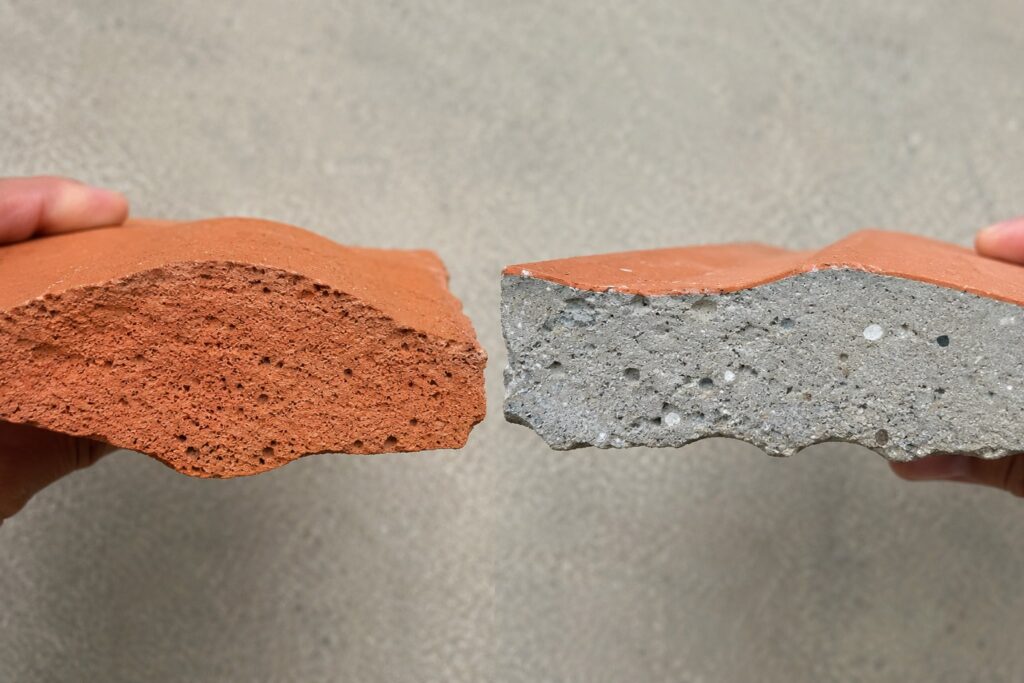
A clay roof tile is defined as a roofing tile made from natural clay that is molded and fired in a kiln at high temperature, which locks its color through the full thickness of the tile and creates a dense, low absorption surface. A concrete roof tile is defined as a roofing tile made from a mixture of sand, cement, and water that is molded under pressure and cured rather than fired, with color added either through the mix or as a surface coating.
That manufacturing difference drives everything else in this comparison. Firing makes clay dense and nearly waterproof, which is why its color and structure survive for generations. Curing leaves concrete slightly porous, which makes it cheaper to produce but more prone to absorbing water, growing moss, and fading over time. In the US, clay tile is manufactured to the ASTM C1167 standard and concrete tile to the ASTM C1492 standard, and the Tile Roofing Industry Alliance publishes installation and performance guidance covering both materials.
How do clay and concrete roof tiles compare side by side?
Clay tile beats concrete tile on lifespan, water absorption, color permanence, and weight on the roof, while concrete tile beats clay on upfront cost, impact resistance, availability, and design variety. The table below shows the core numbers, based on typical 2026 US market ranges as commonly reported by roofing contractors and tile suppliers.
Factor
Clay tile
Concrete tile
Installed cost per square (2026)
$1,100 to $2,200
$700 to $1,900
Lifespan
50 to 100 years
30 to 50 years
Weight per square (100 sq ft)
600 to 1,000 lbs
820 to 1,200 lbs
Water absorption
Under 6 percent
10 to 13 percent
Color
Fired in, permanent
Pigment or coating, can fade
Freeze thaw performance
Excellent when rated
Good, but absorbed water is a risk
Style and color options
Limited to natural clay tones
Very wide, can mimic slate, wood, clay
Walkability
Very fragile
Fragile, slightly tougher
Common warranty
75 years to lifetime
50 years to lifetime
Clay tile pros:
Lasts 50 to 100 years, roughly double the working life of concrete tile
Color is fired through the tile, so it never peels, fades, or streaks
Absorbs under 6 percent water, which limits moss, staining, and winter cracking
Weighs 20 to 40 percent less than concrete tile of a similar profile
Clay tile cons:
Costs 30 to 50 percent more installed than comparable concrete tile
Cracks easily when walked on or struck by large hail or falling branches
Fewer color choices, mostly natural terracotta, red, and earth tones
Fewer US manufacturers, so lead times and shipping costs can be higher
Concrete tile pros:
Costs $700 to $1,900 per square installed, the lowest entry price in tile roofing
Available in a wide range of colors and profiles, including slate and wood shake looks
Slightly better impact resistance than clay against hail and foot traffic
Widely manufactured across the US, so replacement stock is easier to find
Concrete tile cons:
Absorbs 10 to 13 percent of its weight in water, which adds load and feeds moss growth
Surface color can fade, streak, or wear within 15 to 25 years, especially coated tiles
Weighs 820 to 1,200 pounds per square, often the deciding factor on older framing
Prone to efflorescence, a white chalky film that appears as the cement cures
Which costs more, clay or concrete roof tiles?
Clay roof tiles cost $1,100 to $2,200 per roofing square installed in 2026, while concrete roof tiles cost $700 to $1,900 per square, so clay runs roughly 30 to 50 percent more upfront, as commonly reported by US roofing contractors. On a typical 1,500 square foot roof, that gap usually lands between $4,000 and $8,000 at comparable quality levels, before any structural work.
Upfront price is only half the story. Because clay lasts about twice as long as concrete, the cost per year of ownership often flips the comparison. Here is a worked example using the midpoint of each range on a 15 square roof.
Cost measure
Clay tile
Concrete tile
Installed cost (15 squares at midpoint)
$24,750
$19,500
Expected lifespan (midpoint)
75 years
40 years
Cost per year of roof life
$330
$488
At midpoint pricing, a clay tile roof costs about $330 per year of expected life while a concrete tile roof costs about $488 per year, so the cheaper roof upfront is the more expensive roof per year. This math matters most if you plan to own the home for decades. If you expect to sell within 10 to 15 years, the upfront saving on concrete usually wins, because you will not be the owner when either roof reaches the end of its life. A reader ready to turn these ranges into exact figures for their own roof dimensions and pitch can run the numbers in the Tile Roof Calculator on this site.
Which lasts longer, clay or concrete roof tiles?
Clay roof tiles last 50 to 100 years, while concrete roof tiles last 30 to 50 years, so clay roughly doubles the working life of concrete under the same conditions. Some clay tile roofs in Europe have stayed in service for well over a century, which is why clay carries the longest warranties in residential roofing, commonly 75 years to lifetime.
The reason comes back to manufacturing. Kiln firing fuses clay into a dense ceramic that barely reacts to sun, rain, or temperature swings. Cured concrete keeps slowly reacting with water and air across its whole life, which gradually weakens the surface and the pigment layer.
One point applies equally to both materials. The underlayment beneath any tile roof typically needs replacement at 20 to 30 years, even when the tiles above it are still in good shape. That mid life underlayment job means the tiles come off and go back on, and it should be part of any honest lifetime cost comparison for either material.
Which is heavier, clay or concrete roof tiles?
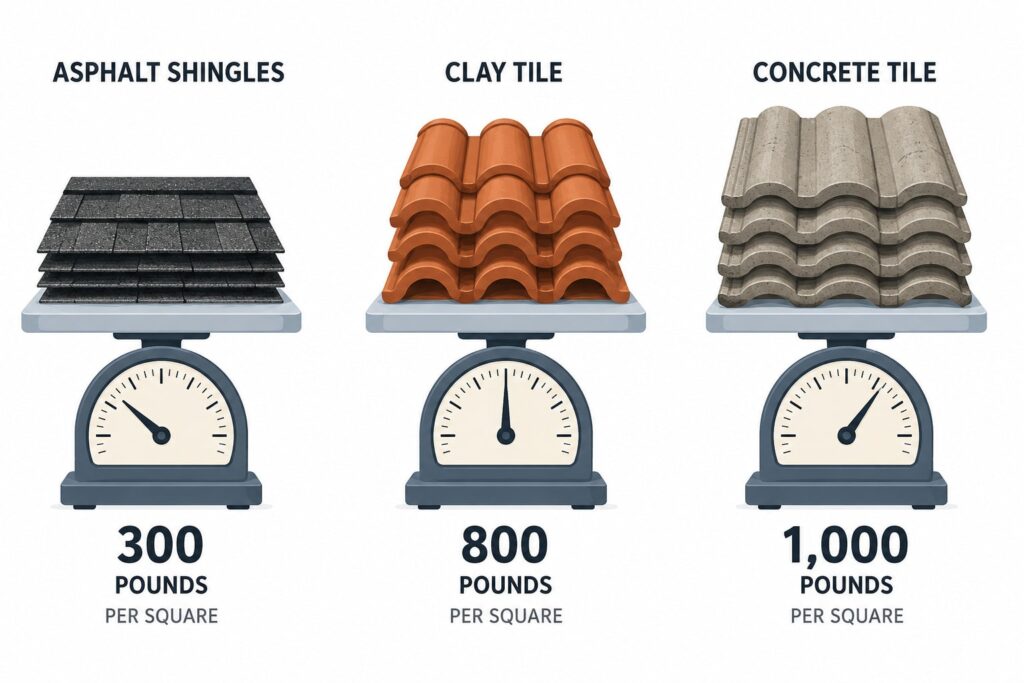
Concrete roof tiles weigh 820 to 1,200 pounds per roofing square, while clay roof tiles of a similar profile weigh 600 to 1,000 pounds per square, making concrete the heavier material by roughly 20 to 40 percent. For comparison, standard asphalt shingles weigh only 225 to 350 pounds per square, so either tile type is a major load increase on a home built for shingles.
Weight matters twice in this decision. First, it decides whether your framing needs reinforcement at all, which is a structural engineering question that must be answered before any tile is ordered. Second, it can decide between the two materials on a borderline roof, since the lighter clay option sometimes passes an engineering check that heavier concrete fails.
Concrete has one more weight problem that spec sheets rarely show. Because concrete absorbs 10 to 13 percent of its weight in water, a fully rain soaked concrete tile roof can temporarily carry an extra 80 to 150 pounds per square that a clay roof does not. Engineers account for this, but homeowners comparing dry weight numbers alone often miss it.
Do clay or concrete tiles absorb more water?
Concrete roof tiles absorb roughly 10 to 13 percent of their weight in water, while clay roof tiles absorb under 6 percent, which makes water absorption one of the largest hidden differences between the two materials. The dense fired surface of clay sheds water almost completely. The porous cured surface of concrete soaks it up like a very slow sponge.
That absorption gap causes three real world problems for concrete that clay largely avoids. Moisture held in the tile feeds moss and algae growth, especially on shaded northern roof faces. Absorbed water adds temporary structural load every time it rains. And in freezing weather, water trapped inside the tile expands as it turns to ice, which stresses the tile from within.
Absorption also drives staining. Wet concrete tile picks up dirt and organic residue that bonds into the porous surface over time, which is why older concrete tile roofs often look streaked while clay roofs of the same age still look clean.
Which holds its color better, clay or concrete tile?
Clay tile holds its color permanently because the color comes from the mineral content of the clay itself and is locked in during kiln firing, while concrete tile color comes from pigments or surface coatings that can fade, streak, or wear off over 15 to 25 years of sun and rain. A 40 year old clay roof and a 4 year old clay roof in the same product line look nearly identical. A 40 year old concrete roof almost never matches its original color.
Concrete tiles colored through the mix hold up better than tiles with a sprayed surface coating, so if you choose concrete, ask the manufacturer which method the product uses. Through color concrete fades more evenly and hides chips better, since the color runs deeper than the surface.
Concrete has one more cosmetic issue called efflorescence, a white chalky film that appears on the surface as free lime in the cement reacts with water and air. The Tile Roofing Industry Alliance technical briefs describe efflorescence as a temporary surface discoloration that does not harm the strength or function of the tile, and it can be cleaned or left to weather away, but it surprises many first time concrete tile owners in the first few years.
Which is better for cold climates, clay or concrete tile?
Clay tile rated for freeze thaw conditions is the better cold climate choice, because its water absorption of under 6 percent leaves very little moisture inside the tile to freeze, expand, and crack it. Concrete tile can perform in cold regions too, but its 10 to 13 percent absorption means more water sits inside the tile through every freeze, which raises the risk of surface flaking and cracking over many winters.
The one warning on the clay side is grade. Not all clay tile is made for freezing weather, and low fired clay tile sold for mild climates can shatter in a northern winter. In the US, look for clay tile rated Grade 1 under the ASTM C1167 standard, which is the severe weathering rating intended for freeze thaw regions, and confirm the rating on the manufacturer’s spec sheet rather than assuming it.
In hot climates the two materials are closer to even. Both handle intense sun and heat well, both are naturally fire resistant, and both shed heat far better than asphalt shingles. In hot humid states like Florida, the absorption difference still favors clay for moss and staining resistance, but concrete’s lower price and strong high wind installation record make it the more common choice there, which is why most tile roofs in Florida and the Southwest are concrete.
Which tile needs more maintenance, clay or concrete?
Concrete tile needs more maintenance than clay tile over its life, mainly because its porous surface invites moss, algae, staining, and efflorescence that clay’s dense fired surface resists. Neither material is high maintenance compared to wood or metal roofing, but the gap between the two is real across decades.
A typical concrete tile roof needs periodic cleaning to remove moss and streaking, occasional resealing in damp climates to slow absorption, and cosmetic attention if surface color wears through in patches. A typical clay tile roof needs almost none of that, and its maintenance list is mostly limited to replacing individual cracked tiles and keeping valleys and gutters clear.
Both materials share two maintenance rules. First, never walk on either roof without proper equipment and training, because foot traffic is the leading cause of cracked tiles on both clay and concrete roofs. Second, keep a small stock of spare tiles from your original order, because matching a discontinued color or profile years later is often impossible.
How can I tell if my roof is clay or concrete tile?
The fastest way to tell clay from concrete tile is to look at a broken or spare tile edge, because clay is the same terracotta color all the way through while concrete shows a gray cement core under its colored surface. If you can find a cracked tile or a spare in the garage from the original installation, the core color answers the question in seconds.
If no broken tile is available, four more checks work from a ladder at the roof edge. Concrete tile feels noticeably rougher and more porous to the touch, while fired clay feels smoother and often slightly glossy. Concrete tiles are visibly thicker and heavier in the hand than clay tiles of the same profile. Tapping a clay tile with a knuckle gives a higher ringing note, while concrete gives a dull thud. And a roof with white chalky patches or heavy streaking is far more likely to be concrete, since those are absorption and efflorescence symptoms clay rarely shows.
Knowing which material you have matters for repairs, insurance paperwork, and resale listings. It also tells you what to expect next, since a 35 year old concrete roof is near the end of its typical life while a 35 year old clay roof may have decades left.
Should I choose clay or concrete tile for my situation?
If your budget is the deciding factor, choose concrete tile, because it delivers the tile look and most of the tile durability at 30 to 50 percent less installed cost. It is the sensible pick for a first tile roof, a rental property, or a home you plan to sell within 10 to 15 years.
If you plan to stay in the home for decades, choose clay tile, because its cost per year of roof life is lower even though its upfront price is higher, and it will likely be the last roof you ever buy.
If you live in a region with freezing winters, choose Grade 1 rated clay tile, because low water absorption is the single most important property for freeze thaw survival. Only consider concrete in cold regions if the specific product carries a strong documented freeze thaw record.
If your home was built for asphalt shingles and the engineering check is borderline, lean clay, because its lower weight per square may pass a structural review that concrete fails, and may reduce the cost of any reinforcement work needed.
If matching a specific look matters most, choose concrete tile, because it comes in far more colors and can convincingly mimic slate, wood shake, or clay barrel profiles at a fraction of those materials’ prices.
If curb appeal decades from now matters most, choose clay tile, because it is the only option in this comparison whose color genuinely does not fade.
Whichever material fits your situation, confirm your roof’s structural capacity with a licensed engineer before ordering anything, then use the Tile Roof Calculator on this site to work out squares, tile counts, and a cost range for your exact roof dimensions and pitch.
What are common mistakes when choosing between clay and concrete tile?
Comparing only the upfront price is the most common mistake, because it ignores that clay lasts about twice as long as concrete. The cost per year of roof life regularly favors clay for long term owners, and skipping that math leads budget focused buyers to a roof they will pay for twice.
Assuming all clay tile survives winter is a costly regional error. Clay tile made for mild climates can shatter in freeze thaw conditions, so northern buyers must confirm a Grade 1 severe weathering rating under ASTM C1167 instead of treating all clay as equal.
Comparing dry weight numbers only understates the real load of concrete. A rain soaked concrete roof temporarily carries an extra 80 to 150 pounds per square of absorbed water that never appears in a brochure spec table.
Ignoring the color method on concrete tile leads to disappointment years later. Surface coated concrete tile fades and streaks faster than through color tile, and many buyers never ask which type they are being quoted.
Skipping the structural review before choosing a material wastes money in both directions. Some buyers pay for reinforcement they could have avoided by choosing lighter clay, while others order concrete their framing cannot legally carry and lose deposits when the project stalls.
Expecting concrete to stay showroom clean sets up frustration. Efflorescence, moss on shaded faces, and gradual streaking are normal concrete tile behavior, not defects, and buyers who cannot accept those cosmetics should budget for clay instead.
Frequently asked questions
What is the difference between clay and concrete roof tiles?
Clay roof tiles are fired natural clay with permanent color and very low water absorption, while concrete roof tiles are molded cement, sand, and water with added pigment that costs less but absorbs more water and can fade. Clay typically lasts 50 to 100 years versus 30 to 50 years for concrete, and clay costs 30 to 50 percent more installed.
Are clay roof tiles better than concrete?
Clay roof tiles are better than concrete for longevity, color permanence, water resistance, and cold climates, while concrete tiles are better for upfront price, style variety, and availability. For most long term owners clay is the stronger buy per year of roof life, and for most budget focused or short term owners concrete is the stronger buy upfront.
How much more do clay tiles cost than concrete tiles?
Clay tiles cost roughly 30 to 50 percent more than concrete tiles, at $1,100 to $2,200 per square installed for clay versus $700 to $1,900 for concrete in 2026, as commonly reported by US roofing contractors. On a typical 1,500 square foot roof that gap is usually $4,000 to $8,000 at comparable quality levels.
How long do concrete roof tiles last compared to clay?
Concrete roof tiles last 30 to 50 years, while clay roof tiles last 50 to 100 years, so clay roughly doubles the service life of concrete. The underlayment beneath either material typically needs replacement at 20 to 30 years regardless of which tile is on top.
Do concrete roof tiles fade?
Yes, concrete roof tiles can fade, streak, or wear over 15 to 25 years because their color comes from pigments or surface coatings rather than being fired in. Through color concrete tiles fade more slowly and evenly than surface coated tiles, while clay tile color does not fade at all because it is locked in during kiln firing.
Is a concrete tile roof heavier than clay?
Yes, concrete tile weighs 820 to 1,200 pounds per roofing square compared to 600 to 1,000 pounds for clay tile of a similar profile, making concrete roughly 20 to 40 percent heavier. Concrete also absorbs 10 to 13 percent of its weight in rainwater, which adds temporary load that clay does not carry.
I live in a northern state with hard winters and my roofer offered both clay and concrete. Which should I pick?
Pick clay tile rated Grade 1 for severe weathering under ASTM C1167, because its water absorption of under 6 percent leaves very little moisture inside the tile to freeze and crack it across repeated winters. Concrete’s higher absorption makes freeze thaw damage more likely over decades, so only accept concrete in a hard winter region if the specific product has a strong documented freeze thaw record and the price gap is large.
My house was built in the 1990s with asphalt shingles. Can I put clay or concrete tile on it, and does the choice matter?
Probably yes with reinforcement, and the choice matters because clay’s lower weight sometimes passes a structural review that concrete fails. Either tile type weighs roughly three to five times more than the asphalt shingles your framing was designed for, so a licensed structural engineer must confirm capacity before you order anything, and reinforcement work typically adds $1,000 to $10,000 to the project.
My concrete tile roof has white chalky patches after one year. Is something wrong with it?
No, those patches are almost certainly efflorescence, a normal temporary film of lime residue that appears as the cement in new concrete tiles reacts with water and air. It does not weaken the tile, it can be cleaned off or left to weather away on its own, and the Tile Roofing Industry Alliance classifies it as a cosmetic condition rather than a defect.
How do I know how many clay or concrete tiles my roof needs?
Tile count depends on your roof dimensions, pitch, tile profile, and waste factor, and clay and concrete profiles cover different areas per tile, so the material choice changes the count. The Tile Roof Calculator on this site converts your building length, width, and pitch into squares, tile count, and a 2026 cost range for either material.
The bottom line
Clay and concrete roof tiles both outlast almost every other residential roofing material, so neither is a bad choice, but they serve different buyers. Clay is the long term owner’s tile: it costs more on day one and less per year of life, and it looks the same in year 40 as it did in year one. Concrete is the value tile: it delivers most of the durability and all of the tile look for 30 to 50 percent less money, with more styles to choose from. Match the material to your climate, your framing, and how long you plan to own the home, get the structural review done first, and either tile will serve you for decades. This guide is built for informed decision making; for a binding quote or a structural determination, always work with a licensed local contractor and your building department.
Most homes can hold about 20 pounds of snow per square foot before the roof feels stressed. That works out to roughly 4 feet of fresh, fluffy snow. Or about 2 feet of old, packed snow. That number is not fixed for every roof. It shifts based on your roof’s age, pitch, and material. It…
A low pitch roof has a shallow slope. It generally sits between flat and a standard 4:12 pitch. It needs different materials, ventilation, and waterproofing than a steep roof. Most sources place the low slope cutoff between 2:12 and 4:12. OSHA sets its own regulatory line at 4:12 for fall protection purposes. Asphalt shingles work…
The most common types of roof trusses are Fink, Howe, Scissor, Attic, Mono, Queen Post, King Post, and Hip trusses. The right one for your project depends on a few things. These include your roof span. They also include your ceiling style. And they include whether you need extra storage or living space above. Fink…
Here is how to measure a roof for shingles in four steps. Find your building’s exterior length and width. Add your eave overhang. Apply a pitch correction for slope. Convert the total into roofing squares. You can do this from the ground with a tape measure and a level. You can also do it from…
Metal Roof vs Asphalt Shingles is one of the most important comparisons for homeowners planning a roof replacement in 2026. Asphalt shingles cost less upfront and remain the practical choice for most homeowners on a standard budget or planning to sell within 10 years. Metal roofing costs two to five times more to install but…
A gambrel roof design is the right choice when you want the most usable upper floor space for your money, which is why it dominates barns, storage sheds, and Dutch Colonial homes across the US. Builders commonly estimate that a gambrel delivers roughly 40 to 50 percent more usable upper level space than a gable…