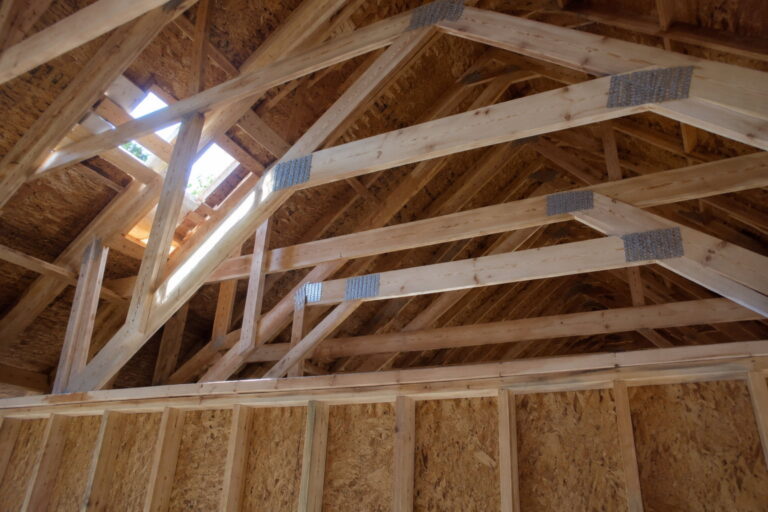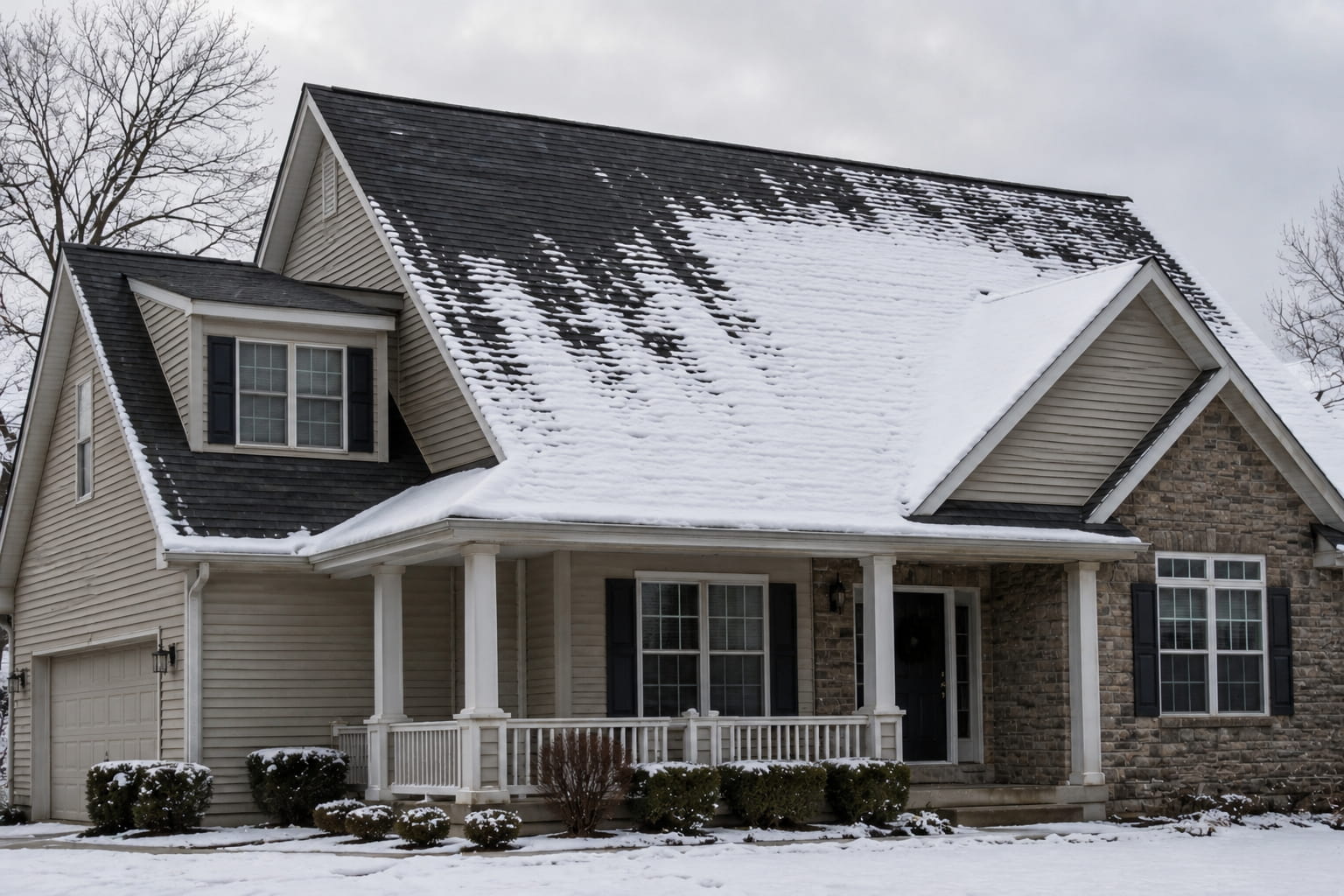
Most homes can hold about 20 pounds of snow per square foot before the roof feels stressed. That works out to roughly 4 feet of fresh, fluffy snow. Or about 2 feet of old, packed snow.
That number is not fixed for every roof. It shifts based on your roof’s age, pitch, and material. It also shifts based on how wet or packed the snow is. The same storm can be safe on one roof and risky on another.
If your roof is newer and shows no sagging or cracks, normal winter snow is rarely a real threat. The risk grows on older homes. It also grows on flat roofs, or any roof already carrying damage. The sections below explain the 20 PSF baseline. They also cover the warning signs to watch for and what to do next.
What is roof snow load?
Roof snow load is the total weight that snow and ice place on a roof. It is measured in pounds per square foot, or PSF. It is one part of a roof’s total load. The other parts are the weight of the roof material itself and anything else pressing down on it.
Snow load is not fixed. It changes hour by hour as snow falls, packs down, melts a little, and refreezes. The same visible depth of snow can mean very different weights depending on timing and temperature. For a full breakdown of every load type on a roof, including material weight and wind, the Roof Load Calculator on this site walks through dead, live, snow, and wind load together for your specific roof.
How much snow can a roof hold?
Most homes are built to hold about 20 pounds per square foot of snow before the structure feels stressed. This figure comes from guidance published by the Insurance Institute for Business and Home Safety. In plain terms, that baseline equals roughly 4 feet of fresh, fluffy snow. Or about 2 feet of old, packed snow, since packed snow holds far more water per inch of depth.
That 20 PSF number is a general planning figure. It is not a guarantee for every home. Homes in regions with heavy yearly snowfall are often built for a higher load from the start. Some are built for 40, 60, or even over 100 PSF in the heaviest mountain snow zones. Homes in milder climates are usually built only to the 20 PSF baseline, since a heavier design would add cost with no real benefit. Older homes may fall short of even that baseline, especially if the roof has past storm or water damage.
If you want an exact number for your own roof size, pitch, and material, the Roof Load Calculator on this site combines your roof details with your local snow data. It returns a full PSF estimate built for your home.
Does all snow weigh the same?
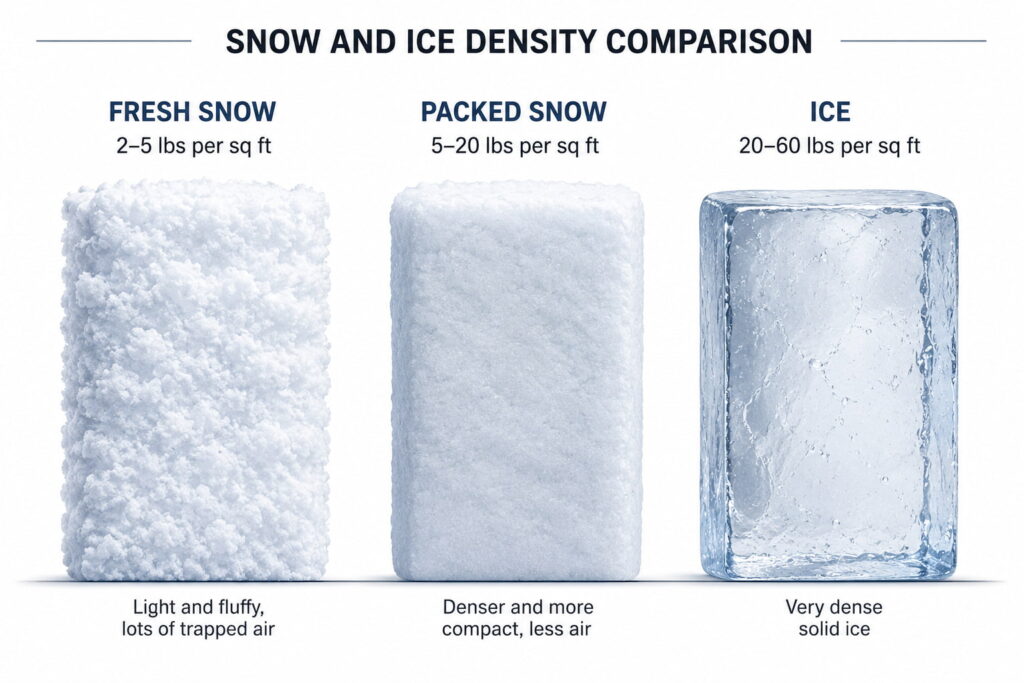
No. Snow does not weigh the same at every stage, and this difference matters more than depth alone. According to the Insurance Institute for Business and Home Safety, about 10 to 12 inches of fresh snow equals roughly 1 inch of water, or about 5 pounds per square foot. Only 3 to 5 inches of old, packed snow equals that same 1 inch of water and 5 PSF.
| Snow condition | Approximate depth per 5 PSF | Approximate safe depth at 20 PSF |
|---|---|---|
| Fresh, fluffy snow | 10 to 12 inches | About 4 feet |
| Old, packed snow | 3 to 5 inches | About 2 feet |
| Ice | Roughly 1 inch | A few inches |
Ice is by far the heaviest form of frozen water on a roof. A cubic foot of solid ice weighs around 57 pounds. A cubic foot of fresh snow weighs well under 10 pounds. This is why a thin layer of ice from freezing rain can add more real weight than a much deeper layer of fresh powder. Depth alone is a poor way to judge danger. You also need to know what kind of snow or ice you are looking at.
The freeze and thaw cycle makes this worse over a winter. Snow that partly melts on a warm afternoon and refreezes overnight gets denser and heavier each time. A roof holding snow from several storms in a row, with no full melt in between, can carry far more real weight than the total depth alone would suggest.
How much snow can a flat roof hold compared to a pitched roof?
A flat or low slope roof holds snow longer than a steep roof. There is little angle for snow or meltwater to slide off. This means a flat roof reaches its design snow load faster during the same storm. A roof with a steeper pitch, above roughly 3 to 4 inches of rise per 12 inches of run, sheds snow much better through gravity and melting.
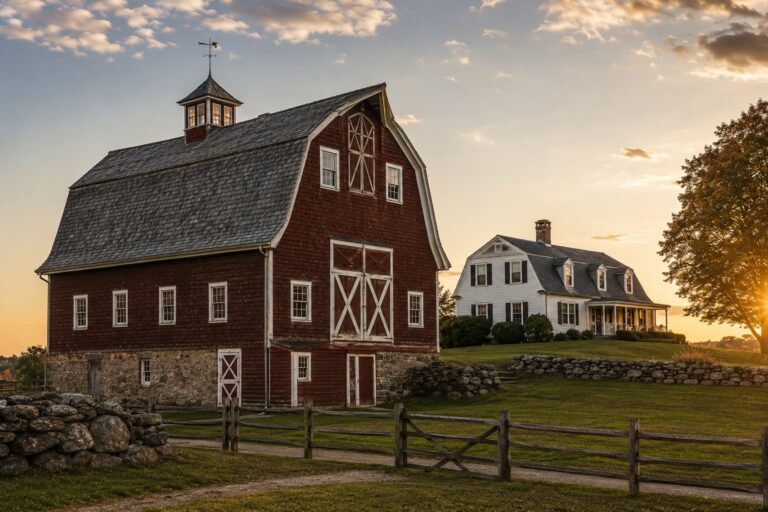
Roof shape still matters within the pitched category too. A gambrel roof is the classic barn style roof with two slopes. It is covered in more detail in this site’s Gambrel Roof Design guide. Its steep lower slope sheds snow well. But its shallow upper slope acts more like a low slope roof and can hold snow much longer. Do not assume a gambrel roof sheds snow evenly across its whole surface.
Flat roofs also face a second risk: uneven piling. Snow drifts against parapet walls, HVAC units, and other rooftop objects on a flat roof. This creates pockets of much higher load than the roof’s average. Pitched roofs rarely see this same pattern.
Which roofing materials handle snow load best?
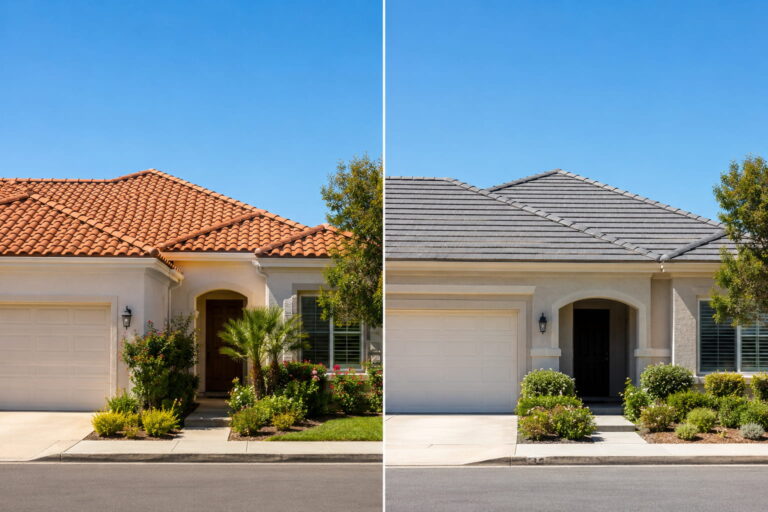
Metal roofing sheds snow and ice fastest among common home roofing materials. Its surface is smooth and low friction. But that same smooth surface means metal roofs can release large slabs of snow all at once, rather than shedding it in small amounts. Asphalt shingle roofs shed reasonably well at typical pitches, but hold snow longer than metal due to their rougher texture. Clay, concrete tile, and slate are the heaviest roofing materials to start with. That matters because this weight stacks directly on top of whatever snow arrives later.
| Roofing material | Snow shedding behavior | Consideration |
|---|---|---|
| Metal panel | Sheds fastest due to smooth surface | Can release snow in sudden slabs, snow guards often used |
| Asphalt shingle | Moderate shedding | Most common material, well understood design loads |
| Clay or concrete tile | Slower shedding, rough surface | Heaviest dead load, 15 to 27 PSF before any snow is added |
| Slate | Slower shedding, rough surface | Similarly heavy dead load, 15 to 27 PSF before any snow is added |
| Flat membrane roofing | Minimal natural shedding | Depends entirely on drainage and periodic removal |
Material choice only tells part of the story. Roof weight and snow weight add together. A 2,000 square foot tile roof carries over 20,000 pounds of dead weight before a single snowflake falls. A heavy material combined with a big snow event reaches a roof’s total limit faster than the same storm would on a lighter material. If you are choosing a material for a snow prone area, weigh shedding behavior and dead weight together. Do not compare shedding alone.
What are the warning signs of too much snow on a roof?
A sagging or uneven roofline, seen from the ground, is the clearest outside warning sign. Gutters pulling away from the house, cracked roofing material, and doors or windows that suddenly stick are all signs the structure is flexing under too much weight.
Inside the home, check the attic and ceilings, not just the roof itself. Fresh water stains, damp insulation, new cracks in drywall, and popping or cracking sounds are all signs to treat as urgent. Do not just keep watching them over time.
Bowing walls or ongoing popping and cracking sounds mean you have an emergency. Call for help right away. Do not wait to see if a sagging ridge line gets worse on its own. That waiting is one of the most dangerous mistakes a homeowner can make during a heavy snow event.
Should I remove snow from my roof myself?
Clearing light, fresh snow from the ground with a roof rake is reasonably safe on a single story home. Climbing onto a snow or ice covered roof yourself is not safe in almost any case. A roof rake with a long pole lets you clear the lower few feet of a roof edge from solid ground. This alone often lowers ice dam risk and lightens the load where problems usually start.
Deep, packed, or icy snow is a job for a professional. Roofing contractors have the right gear, harnesses, and training to remove snow safely. Doing it yourself can crack shingles, void your roof warranty, or cause a fall. Never knock icicles down casually either. Falling ice can damage gutters and downspouts, and the process itself is genuinely dangerous from a ladder.
If your roof has solar panels, take even more care. Clear panels only with a soft brush. Do not scrape them or use sharp tools, since this can damage the cells or their mounts.
What should you do if you are worried about your roof’s snow load?
If you see any of the warning signs above, stop watching and act. Call a licensed structural engineer or an experienced roofing contractor for an in person look. Do not try to judge severity from photos alone.
If your home was built before your area’s current building code, call your local building department. Ask what snow load rule applied when your home was permitted. Some older homes in snowy regions were built before today’s stronger rules took effect. This one phone call is often the fastest way to find out if your home has a real gap.
If you want a planning estimate before calling anyone, use the Roof Load Calculator on this site. It combines your roof’s size, pitch, material, and local snow data into one PSF figure. Bring that number into your conversation with a professional. Do not treat it as a replacement for one once real warning signs show up.
If nothing looks wrong but you want peace of mind after a big storm, book a roof check once everything has melted. This is a reasonable step for older roofs, or any roof that has never been checked by a pro.
What are common mistakes people make with roof snow load?
Judging danger by visible depth alone is the most common mistake. Four feet of fresh powder and two feet of packed, refrozen snow can weigh close to the same. Depth alone, without knowing the snow type, tells you very little.
Assuming a steep roof is safe everywhere is a second common error. This is especially true on gambrel roofs and other multi slope shapes. One section sheds well while a shallower section acts more like a flat roof. Treat each roof plane on your home on its own. Do not assume the whole roof performs the same way.
Knocking icicles down with no plan causes real damage almost every winter. Falling ice can crack gutters, dent downspouts, and hurt anyone standing below. Plan any icicle removal, and call a pro for anything beyond small icicles.
Ignoring an older home’s original build is a mistake with real risk. A home built decades ago, in a region where snow rules have since gotten stricter, may never have been built for today’s standards. Do not assume an older roof automatically meets current rules.
Looking at one storm in isolation misses the freeze and thaw effect. A few moderate snowfalls that partly melt and refreeze between storms can leave more real weight than one big storm followed by a clean melt. Total winter conditions matter as much as any single event.
Frequently asked questions
How much snow can a roof hold?
Most homes can safely hold about 20 pounds per square foot of snow. That is roughly 4 feet of fresh snow or 2 feet of old, packed snow, based on guidance from the Insurance Institute for Business and Home Safety. Homes in heavy snowfall regions are often built for a higher load from the start, so your own safe number can be higher or lower than this general baseline.
How much snow can a flat roof hold?
A flat roof holds snow longer than a pitched roof, since there is little slope for snow to slide off. This means it reaches its design snow load faster during the same storm. Flat roofs are also more prone to uneven drifting around rooftop objects, so they need closer watching than pitched roofs carrying the same total snowfall.
How much snow weight can a roof hold before it collapses?
There is no single collapse point that applies to every roof. Collapse risk depends on the roof’s age, condition, design, and the type of snow involved. The 20 PSF baseline marks where stress typically starts on a standard, undamaged home. It is not the exact point of failure. This is why visible warning signs matter more than any single number.
How much snow can a metal roof hold?
Metal roofs shed snow faster than asphalt shingle or tile roofs, thanks to their smooth surface. This lowers how much snow builds up at any one time under the same snowfall. That same smooth surface means metal roofs can release built up snow suddenly, in large slabs. This is why snow guards are common near roof edges in snowy climates.
Is it okay to leave snow on my roof?
A thin, even layer of snow is usually safe on a sound roof. But the real answer depends on depth, snow type, and your roof’s condition. If snow depth nears the 4 foot fresh or 2 foot packed benchmarks, or you see warning signs like sagging or sticking doors, remove the snow or call a professional rather than waiting.
What roofing material handles snow load best?
Metal roofing sheds snow and ice fastest, thanks to its smooth surface, though it can release snow suddenly. Asphalt shingles handle typical home snow loads well at standard pitches. Heavier materials like tile and slate add real weight on their own, which stacks on top of whatever snow builds up later.
I live in an area with heavy snowfall and my roof was built in the 1980s. Should I be worried?
Possibly. Building codes and snow rules have changed in many areas since the 1980s. Your roof’s original build may not match current standards for your area. Call your local building department to check what code applied when your home was permitted. Consider a professional check if your home has never been reviewed against today’s snow load rules.
My roof is flat and it snowed heavily for three days straight without much melting between storms. What should I do?
This is exactly the kind of situation that puts the most load on a flat roof. Repeated snowfall with no full melt in between adds up faster than one large storm. Book professional snow removal soon. Watch for warning signs like ceiling stains, sagging, or strange sounds in the meantime.
Can adding solar panels affect how much snow my roof can hold?
Yes. Solar panels and their mounts add a small amount of extra weight. Snow can also pile up around and behind panels instead of sliding off cleanly. Most homes built under current codes can support solar hardware without issue. Still, it is worth confirming your roof’s real load limit before installing panels rather than assuming. The Roof Load Calculator on this site is a good starting point for that estimate.
How do ice dams relate to roof snow load?
Ice dams form when snow melts on a warmer upper section of roof, then refreezes at the colder eaves. This creates a ridge of ice that blocks drainage and can force water back under the shingles. Ice dams are a related problem, but a different one from total snow weight. A roof can develop a damaging ice dam long before its snow load becomes a real structural risk. This is why gutter and attic upkeep matter even in a normal snow year.
The bottom line
Twenty pounds per square foot is the number to remember. Roughly 4 feet of fresh snow, or 2 feet of packed snow, is the easy version of that same benchmark for a standard, undamaged home. Your real safe limit depends on your roof’s age, material, and pitch, and on local building standards. A real warning sign, like a sagging ridge or a sticking door, matters more than any depth measured from the ground. When in doubt, get a professional opinion before a storm gets worse, not after something breaks. This guide is built for informed decision making. For a genuine structural concern, always consult a licensed structural engineer or your local building department.